Traditional Indian Masks: Meanings, Rituals & Traditions
Traditional Indian masks are not a single art form but a diverse group of regional traditions used in ritual, dance, theater, festivals, storytelling, and craft. Their forms and meanings vary widely: Chhau masks help identify epic characters in eastern India, Majuli masks bring Vaishnavite drama to life in Assam, and Cham masks appear in Himalayan Buddhist ceremonies.
Other traditions rely as much on face painting, headgear, and costume as on a separate mask. Understanding these differences is essential, because there is no universal “Indian mask” style, color code, or spiritual meaning shared across the country. For other culturally significant examples, explore our guide to famous masks from different cultures.
What Are Traditional Indian Masks?
Traditional Indian masks are facial coverings, sculpted forms, or performance objects created within specific regional communities and artistic traditions. Some are worn during dance or theater, some appear in religious festivals, and others function as ritual or ceremonial objects. Their meaning comes from the performance, story, deity, community, or festival in which they are used—not simply from their shape or color.
India’s mask traditions also cross religious and cultural boundaries. They include Hindu epic storytelling, Buddhist monastic dance, Vaishnavite theater, village festivals, regional folk performance, and local ritual practices. In some traditions the mask fully hides the performer’s face; in others, visual transformation depends on a combination of mask, makeup, headgear, costume, and movement.
| Tradition | Region | Main Context | Typical Form |
|---|---|---|---|
| Chhau | West Bengal and Jharkhand | Dance, festivals, epic and folk storytelling | Painted masks made with paper, clay, cloth, and decoration |
| Cham | Ladakh, Sikkim, and Himalayan Buddhist regions | Monastic ritual dance | Sculpted masks representing protectors, teachers, animals, and other figures |
| Majuli | Assam | Bhaona and Vaishnavite theater | Face masks and larger bamboo-based character forms |
| Cheriyal | Telangana | Storytelling and folk performance | Brightly painted masks linked to narrative art |
| Theyyam | Northern Kerala | Ritual performance | Face painting, headgear, costume, and in some forms mask-like elements |
| Ramman | Uttarakhand | Religious festival and ritual theater | Sacred masks worn by designated community members |
Major Traditional Indian Mask Traditions
India’s best-known mask traditions developed in distinct regional and religious settings, from eastern dance theater to Himalayan Buddhist ceremonies and local ritual festivals. Looking at them individually makes it easier to understand how their forms, materials, and uses differ across the country.
Chhau Masks
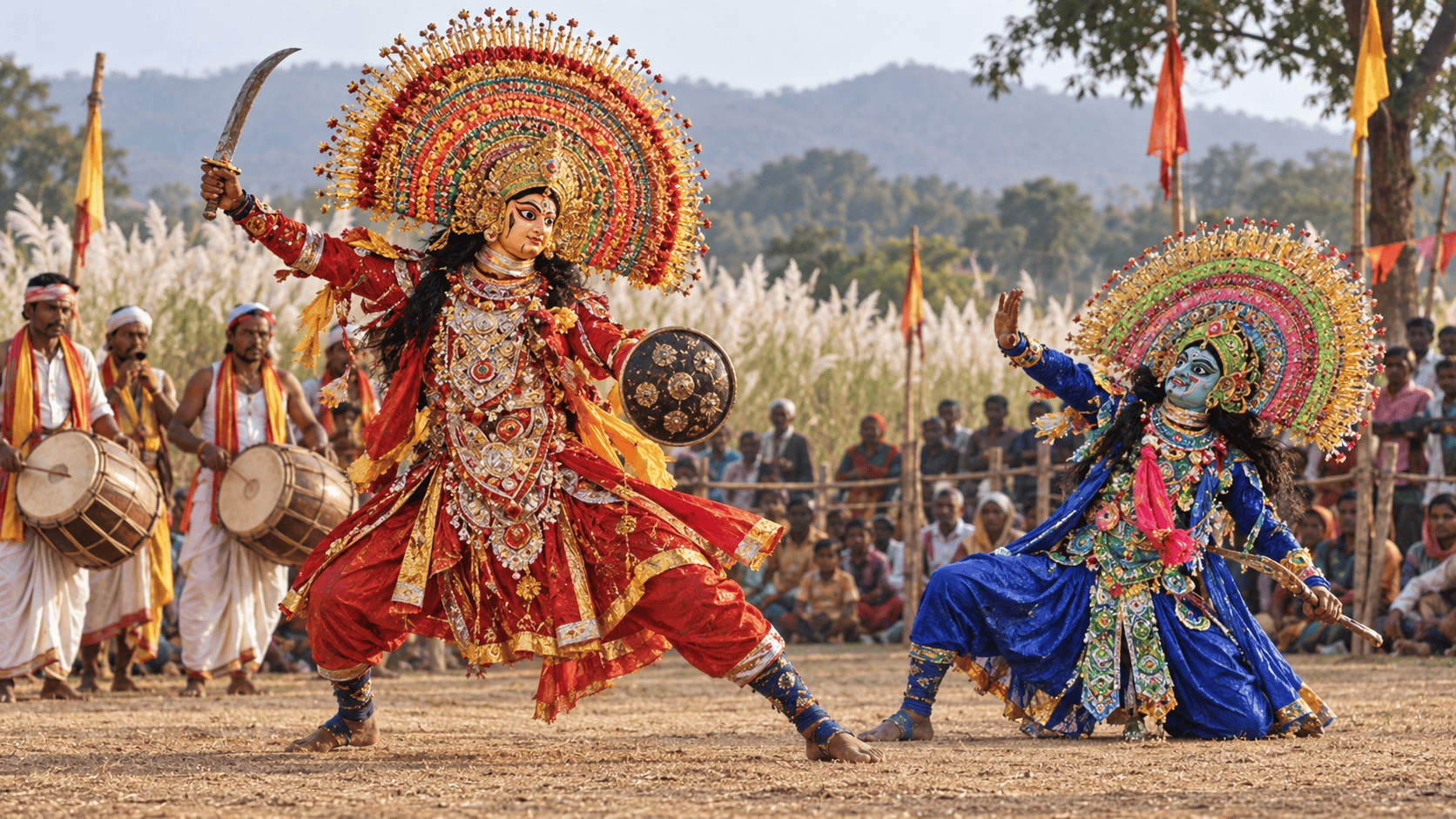
Chhau is one of India’s best-known masked performance traditions, but an important distinction is often missed. UNESCO recognizes three styles—Seraikella, Purulia, and Mayurbhanj—and only the Seraikella and Purulia styles use masks. Mayurbhanj Chhau is performed without them. Chhau draws on episodes from the Ramayana and Mahabharata, local folklore, abstract themes, and movements influenced by martial practices. For a broader comparison with other theater masks and masked performance traditions, see our dedicated guide.
Purulia masks, especially those associated with Charida in West Bengal, are built from layers of paper, clay, and cloth over a modeled form, then painted and decorated. Gods, demons, animals, and heroic figures can be recognized through exaggerated facial features and elaborate headdresses. The mask works with the dancer’s body, costume, music, and movement rather than as an isolated decorative object.
Cham Masks
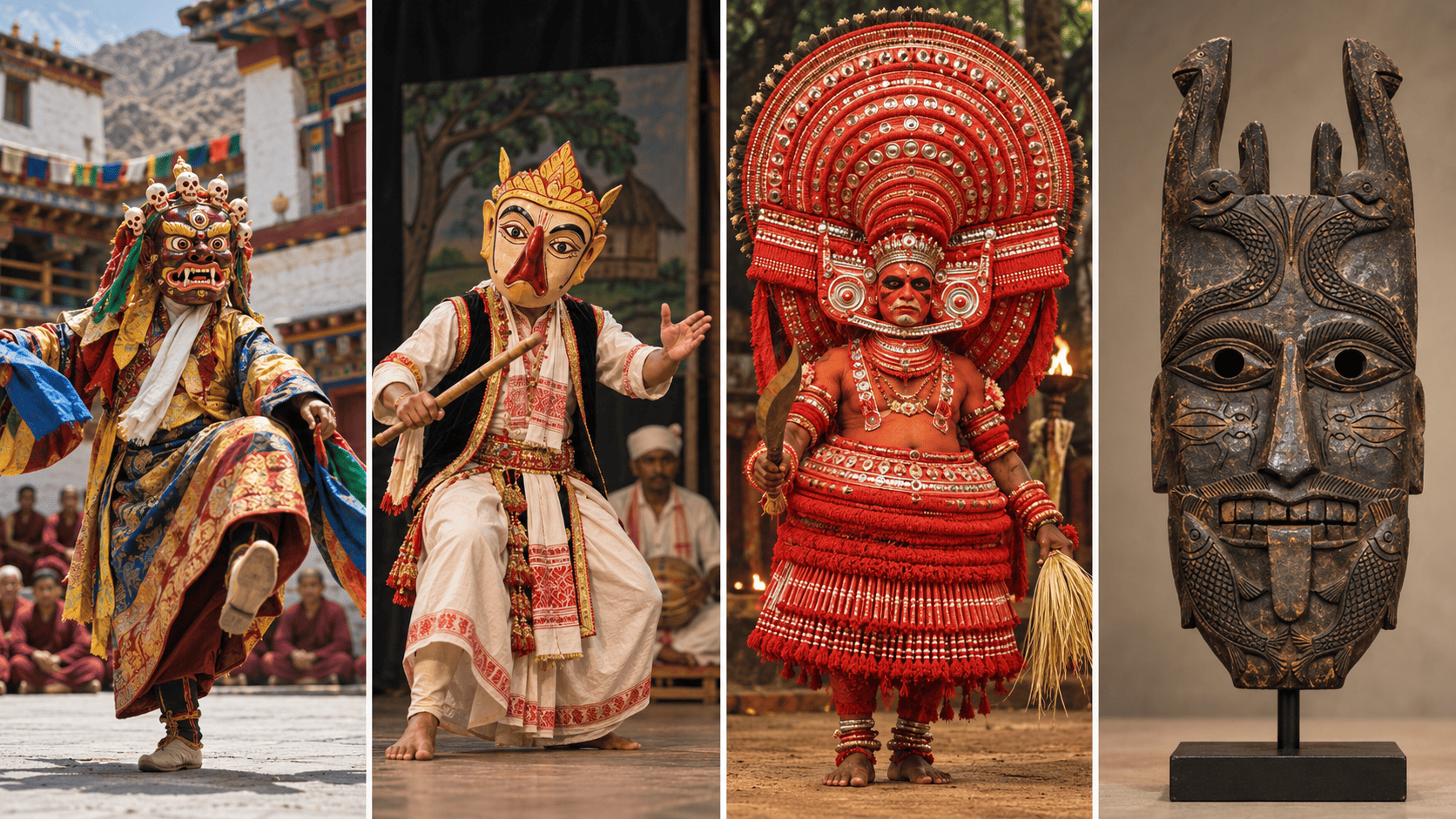
Cham is a masked Buddhist dance performed in Himalayan regions including Ladakh and Sikkim, often in monastery courtyards during religious festivals. The masks can depict manifestations of Padmasambhava, protective deities, skeleton figures, animals, and other characters within Vajrayana Buddhist narratives. Their fierce appearance should not automatically be interpreted as “evil”: wrathful imagery can represent protective or transformative forces.
The performance combines masks with brocaded costumes, ritual music, chanting, cymbals, drums, horns, and choreographed movement. In Sikkim, masked monastic dances are performed on ceremonial occasions and are closely tied to Buddhist festival life, while Ladakhi Cham traditions include highly specific sequences and characters.
Majuli Masks and Bhaona
On the river island of Majuli in Assam, mask making developed within the sattras, Vaishnavite religious and cultural institutions associated with the tradition of Srimanta Sankardeva. The masks are used in Bhaona, devotional theater that brings mythological and epic characters before an audience. Figures can include Ravana, Garuda, Narasimha, Hanuman, animals, birds, and other beings that would be difficult to portray through the actor’s face alone.
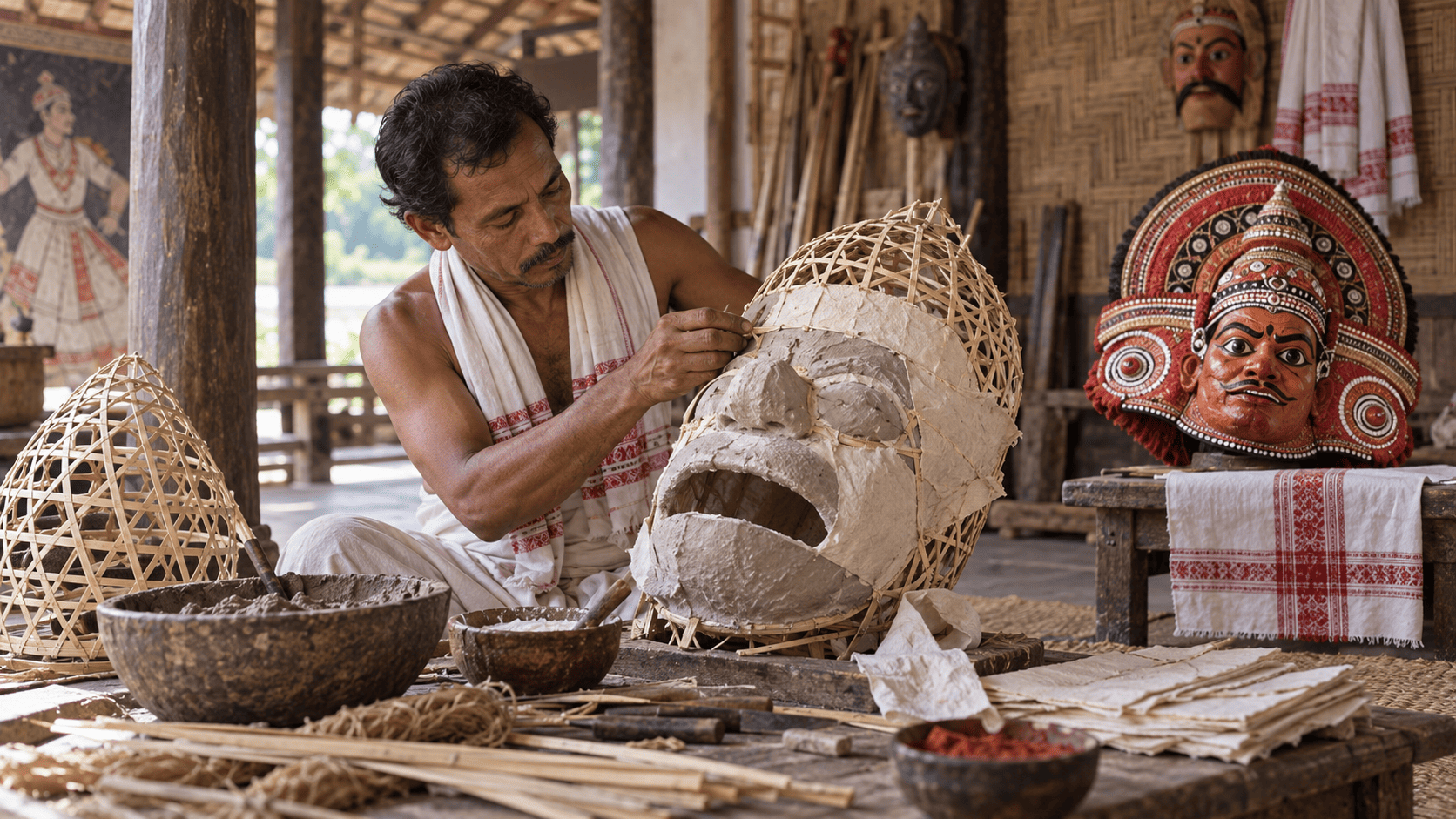
Majuli masks range from mukh mukha, which cover the face, to much larger forms that extend around the head or body. Bamboo is central to many traditional structures, combined with cloth, clay, paper, cotton, wood, and other locally available materials. The Majuli Mask of Assam received Geographical Indication registration in 2024, highlighting the continuing identity of the craft as a regional tradition.
Cheriyal Masks
Cheriyal masks belong to the broader narrative-art tradition of Telangana, best known for its painted storytelling scrolls. Historically, traveling performers used visual aids—including scrolls, puppets, and masks—to accompany stories drawn from folklore, religious narratives, and everyday life. The masks are recognizable for their bold colors and simplified, expressive faces.
Traditional Cheriyal mask making uses a molded form and materials such as sawdust and tamarind-seed paste before the surface is painted. Today, smaller masks are also produced as decorative craft objects, extending the tradition beyond its earlier storytelling contexts.
Theyyam: Mask, Makeup, and Headgear
Theyyam, a ritual art of northern Kerala, shows that facial transformation does not always depend on a separate removable mask. Elaborate face painting, towering headgear called mudi, ornaments, costume, body decoration, and movement work together to create the ritual persona. Some Theyyam characters also use face masks or mask-like elements, but makeup and headgear remain central to the visual language of the tradition.
Theyyam is performed in shrines and community settings, particularly in Kannur and Kasaragod, with music, song, and ritual preparation. Individual forms have their own costumes, painting patterns, accessories, and performance conventions.
Ramman and the Sacred Narasimha Mask
Ramman, performed in the twin villages of Saloor-Dungra in Uttarakhand, combines religious festival, oral tradition, music, theater, and masked dance. One of its most important objects is the mask of Narasimha, the half-man, half-lion form of Vishnu. UNESCO records that only the Bhandaris, who hold a specific traditional role in the community, are entitled to wear this especially sacred mask.
The restriction illustrates how the status of a mask can depend on community rules, ritual responsibility, and the identity of the person permitted to wear it.
Bastar Masks: Ritual, Performance, and Craft
Bastar in Chhattisgarh has several mask traditions associated with local communities, ritual, dance, and performance. Museum and cultural collections document carved wooden masks representing deities, animals, comic figures, and characters used in dances or worship. Some masks were worn, while others were installed as ritual objects rather than placed on the face.
Bastar is also famous for Dhokra lost-wax metal casting and wrought-iron craft. Contemporary metal masks form part of the region’s wider craft economy, while many documented traditional Bastar masks are wooden, so the two material traditions should not be treated as identical.
What Do Traditional Indian Masks Represent?
Traditional Indian masks can represent religious figures, protectors, animals, epic characters, and other beings, while also marking changes in a performer’s identity or ritual role. Their symbolism becomes meaningful only within the particular story, ceremony, or performance in which the mask appears.
Deities, Protectors, Animals, and Epic Characters
The subject of a traditional Indian mask depends on its cultural setting. Chhau can portray characters from Hindu epics as well as animals and local stories. Majuli masks help embody deities, demons, birds, and mythological beings in Bhaona. Cham masks may represent Buddhist teachers, protective deities, skeleton figures, or symbolic forces. Ramman includes sacred masks connected with local religious roles.
Because these traditions developed in different regional and religious contexts, there is no reliable nationwide code in which one color, facial expression, animal, or supernatural figure always carries the same meaning. Interpretation depends on the specific tradition and performance.
Transformation, Identity, and Community
A mask can do more than identify a character. It can temporarily change the social and visual identity of the performer, connect a dancer with a ritual role, or make an otherwise invisible being visible to an audience. In some settings the transformation is theatrical; in others it has a sacred dimension defined by community practice.
Meaning also comes from the wider performance. Movement, costume, music, spoken or sung narrative, ritual rules, and audience participation can all shape how a mask is understood. A mask displayed alone in a museum or sold as decorative art may therefore reveal its craftsmanship while leaving much of its original performance context invisible.
How Traditional Indian Masks Are Made
Mask-making techniques vary according to region and intended use. A mask worn during vigorous dance needs different structural qualities from a carved ritual object or a decorative piece, so artisans adapt their materials and construction methods to both local craft traditions and practical performance needs.
Materials, Weight, and Performance Needs
There is no single construction method for traditional Indian masks. Artisans choose materials according to regional resources, inherited workshop techniques, the size of the mask, and whether the object must be worn during active performance. Paper, clay, cloth, bamboo, wood, natural pastes, pigments, and metal all appear in different traditions.
Lightweight layered materials are especially useful when performers must dance while wearing elaborate headpieces, while bamboo can provide structure for larger forms without excessive weight. Carved wood creates a more rigid object, and metal casting serves very different practical and artistic purposes. In each case, construction is shaped by what the finished object is expected to do—move with a performer, withstand repeated festival use, function as a ritual object, or serve as decorative craft.
Traditional Masks as Living Cultural Heritage
Traditional Indian masks are not simply remnants of the past. Chhau remains a living performance tradition recognized by UNESCO, Majuli mask making continues within Assam’s satras and has received GI recognition, Cham dances remain part of Himalayan Buddhist festivals, and Theyyam continues to be performed in northern Kerala. These traditions survive because performers, craftspeople, religious institutions, families, and local communities continue to transmit knowledge.
From Ritual and Performance to Museums and Decorative Art
Masks can also move into new settings. Cheriyal masks are now commonly produced as decorative objects, Chhau masks are sold beyond their original performance context, and regional mask forms appear in museums and private collections. Commercial adaptation can support artisans and introduce regional crafts to new audiences, but a souvenir or wall hanging does not automatically carry the ritual authority of an object made and used within a specific ceremony.
Understanding these masks therefore requires attention to their region, makers, performance setting, materials, and rules of use. Those details explain not only what a mask looks like, but what role it plays within the cultural tradition that created it.
Hannya Mask Meaning: Symbolism, Colors, and Cultural Legacy
Japanese Mask Meanings: History, Symbolism, and Traditional Types
The History and Symbolism of Masks in Ancient Greek Theatre
Death Masks: History, Purpose, and Famous Examples
Kitsune Mask Meaning, History, and Symbolism in Japan
Scold’s Bridle: History, Use & How the Punishment Worked
Explore More Mask Stories 👇