Hannya Mask Meaning: Symbolism, Colors, and Cultural Legacy
Quick answer: The Hannya mask is a traditional Noh mask representing a woman transformed into a demonic or vengeful spirit through obsessive attachment, jealousy, resentment, and rage. Its frightening features do not express simple evil: the face also preserves anguish and human suffering, which is why Hannya can appear furious from one angle and deeply distressed from another.
The mask is used in Noh plays such as Aoi no Ue, Dōjōji, and Kurozuka. Hannya is not simply another name for an Oni, and modern tattoo meanings—including resilience or protection—should be distinguished from the mask’s traditional theatrical meaning. For other historically and culturally important examples, explore our guide to famous masks from different cultures.
What Is a Hannya Mask?
The Hannya is one of the best-known Noh masks in Japanese theater. It represents an aggressive female spirit or demon whose human identity has been distorted by intense emotional attachment, especially jealousy, resentment, obsession, or rage. Yet the mask is not designed as a one-dimensional monster. Its features preserve traces of pain and dignity, allowing the audience to recognize both the terrifying transformation and the suffering behind it.
Noh developed into its classical form from the fourteenth century onward, but the exact origin of the specific Hannya mask type and its name is less certain. Later tradition connects its creation or perfection with a Muromachi-period mask maker known as Hannya-bō, although that attribution cannot be treated as conclusively proven. What is clear is that Hannya became an established mask for female demonic roles within the Noh repertory.
Historical Hannya masks are carved from wood and carefully painted rather than designed as crude monster faces. Surviving museum examples from the Edo period show how mask makers balanced sharp horns, metallic eyes and teeth, and a tense mouth with a surprisingly refined human structure. That balance is central to the mask’s meaning: the demonic transformation is visible, but the character’s former humanity has not disappeared completely.
The Core Meaning: Jealousy, Rage, Grief, and Transformation
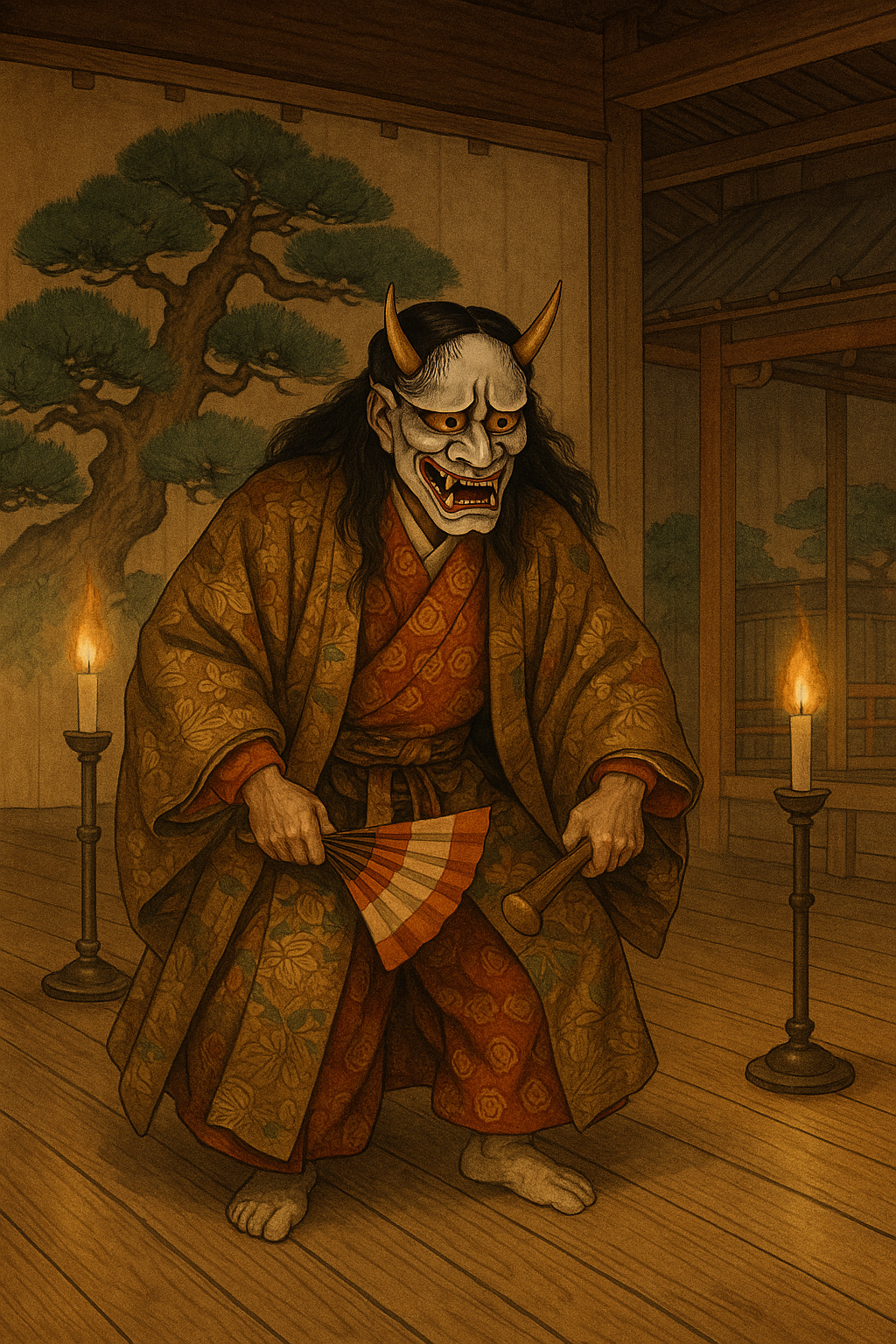
At its core, Hannya represents transformation—what happens when powerful human emotions overwhelm and alter a character’s identity. Jealousy and resentment are central, but grief, humiliation, attachment, and despair remain visible beneath the demonic surface.
This emotional tension is important. Hannya is frightening because the character has crossed into a violent or supernatural state, but she is also tragic because the audience can still perceive the human suffering that produced it. In Noh, fear and sympathy can therefore exist at the same time.
Hannya vs. Oni: What Is the Difference?
Hannya and Oni are often grouped together in modern artwork because both may have horns, fangs, and fierce expressions, but they are not interchangeable. Hannya is a specific Noh mask type associated with female demonic or vengeful roles. Oni is a much broader category of supernatural beings found across Japanese folklore, religion, festivals, art, and theater.
| Feature | Hannya | Oni |
|---|---|---|
| Primary context | Noh theater mask and role type | Broad supernatural category in Japanese tradition |
| Typical identity | Female spirit or demon transformed by obsessive emotion | Varies widely by story, region, ritual, and artistic tradition |
| Core meaning | Jealousy, resentment, rage, suffering, transformation | Can represent danger, punishment, fear, disorder, or other meanings depending on context |
| Visual features | Horns, metallic eyes, fangs, anguished and furious expression | Highly variable; often horned and fierce but not defined by one mask design |
Calling Hannya simply an “Oni mask” can therefore erase the theatrical context that gives the mask its meaning. For a broader comparison of Japanese mask traditions, see our guide to Japanese mask meanings.
Which Noh Plays Use the Hannya Mask?
The meaning of Hannya becomes clearer when the mask is viewed in actual Noh drama. It does not represent one universal “Hannya story.” Different plays use the mask for different female characters, and the circumstances behind their transformation are not identical.
Aoi no Ue and Lady Rokujō
Aoi no Ue is based on an episode from The Tale of Genji. The central supernatural conflict involves the spirit of Lady Rokujō, whose jealousy and resentment become destructive. In the first half of the Noh play, the leading role may appear with a Deigan mask; in the second half, the transformed female spirit appears with Hannya.
This use is especially important for understanding the mask’s emotional complexity. Lady Rokujō is not presented merely as a monster. Her dignity and human suffering remain part of the role even as jealousy becomes violent and demonic. The transition from a more restrained female-spirit mask to Hannya also makes the transformation legible to the audience as the drama intensifies.
Dōjōji and the Temple Bell
Dōjōji centers on a woman whose obsessive passion and rage lead to a serpent-like demonic transformation connected with the famous temple bell. Hannya is a traditional mask choice for the transformed character, although some schools or performance variants may use more strongly serpent-like masks such as Jya or Shin-ja.
This distinction matters because Hannya and serpent masks are related in dramatic function but are not identical types. The more serpent-like Shin-ja has a more extreme, nonhuman appearance and may be chosen when a production emphasizes the character’s transformation into a snake. Hannya retains more visible traces of the human female face, which can make the conflict between rage and suffering especially powerful.
Kurozuka / Adachigahara
Kurozuka—called Adachigahara in the Kanze school—presents a mysterious woman who is eventually revealed as a female ogre. In the second half, the Hannya mask expresses her terrifying form. Yet the play also preserves an atmosphere of loneliness and sadness, making the character more than a simple monster.
Together, Aoi no Ue, Dōjōji, and Kurozuka show why Hannya cannot be reduced to one story about romantic betrayal. The mask is a theatrical type capable of expressing several forms of female demonic transformation, obsessive attachment, resentment, and suffering.
Why Does a Hannya Mask Look Angry and Sad?
The Hannya mask is memorable because it combines visibly demonic features with traces of human anguish. Its expression can feel aggressive, sorrowful, or desperate depending on how the performer presents it. This duality is produced by both the carving itself and the way the mask is used onstage.
Horns, Metallic Eyes, Fangs, and the Anguished Face
Hannya masks typically have two horns, parted or disordered hair, metallic or gold-colored eyes and teeth, pointed canines, and an open, tense mouth. The lower part of the face can appear animal-like and uncontrolled, while the upper portion retains features associated with a human female face. The result is a visual conflict between rage and distress.
Traditional mask makers also aim for more than grotesque fear. Historical Hannya masks can preserve refinement and dignity even when the character appears violently transformed. This balance is one reason the mask can inspire sympathy as well as fear.
Angle, Light, and Performance
A Noh mask has a fixed carved expression, but the audience does not experience it as completely static. Small changes in the angle of the performer’s body alter how light falls across the eyes, cheeks, and mouth. With Hannya, lowering the mask can emphasize the horns and produce a more threatening, aggressive impression, while raising it can reveal greater anguish or distress.
The effect also depends on movement, rhythm, costume, voice, and the dramatic situation. The actor does not simply “make the mask smile or cry”; instead, controlled changes in orientation allow different aspects of the carving to dominate the audience’s perception.
What Do Hannya Mask Colors Mean?
Color is one of the most misunderstood parts of Hannya symbolism. Traditional Noh does not use a universal chart in which every color always carries one fixed psychological meaning. Mask color can relate to role, status, theatrical intensity, school, and the needs of a particular play.
| Color or Mask Context | Traditional Noh Use | Careful Interpretation |
|---|---|---|
| White / Shiro-Hannya | Associated with refined or noble female roles, notably Aoi no Ue | Can preserve dignity and refinement while expressing jealousy and suffering; not simply “purity” |
| Red / Aka-Hannya | Used for more forceful or passionate demonic roles and associated with plays such as Dōjōji | Can heighten intensity, rage, or passion, but red does not have one universal meaning in every production |
| Dark / Black Hannya | Associated in some traditions with the demoness of Kurozuka | Supports a darker and more ominous demonic presentation |
| Jya / Shin-ja | Related serpent masks used in strongly transformed female roles | Separate mask types rather than simply another Hannya color |
| Blue, Gold, Silver, or other modern colors | Common mainly in tattoos, illustration, fashion, and contemporary replicas | No universal traditional Noh meaning; interpretation depends on the artist, wearer, and composition |
This distinction is important for searches such as “blue Hannya mask meaning.” A blue Hannya may be used by a modern artist to suggest sadness, coldness, calm, spirituality, or another personal idea, but those meanings should not be presented as an established traditional Noh color code.
Even within traditional Noh, color is not interpreted in isolation. The same broad Hannya family includes differences in complexion, intensity, and facial treatment that work together with costume, wig, role, and dramatic context. A historically responsible explanation therefore identifies the play and mask type before assigning symbolic meaning to color alone.
What Does the Word Hannya Mean?
In Japanese, Hannya is written 般若. The word is a Buddhist term derived from the Sanskrit prajñā, meaning wisdom or transcendent insight. That linguistic meaning is well established, but it does not prove that the theatrical mask itself originally symbolized “wisdom through suffering,” as some modern explanations claim.
Traditional accounts connect the mask’s name with a mask maker or monk known as Hannya-bō, who was said to have created or perfected the type. The historical attribution is not certain. The safest distinction is therefore simple: the word hannya has a documented Buddhist meaning related to wisdom, while the exact reason that this particular Noh mask came to bear the name remains uncertain.
What Does a Hannya Tattoo Mean?
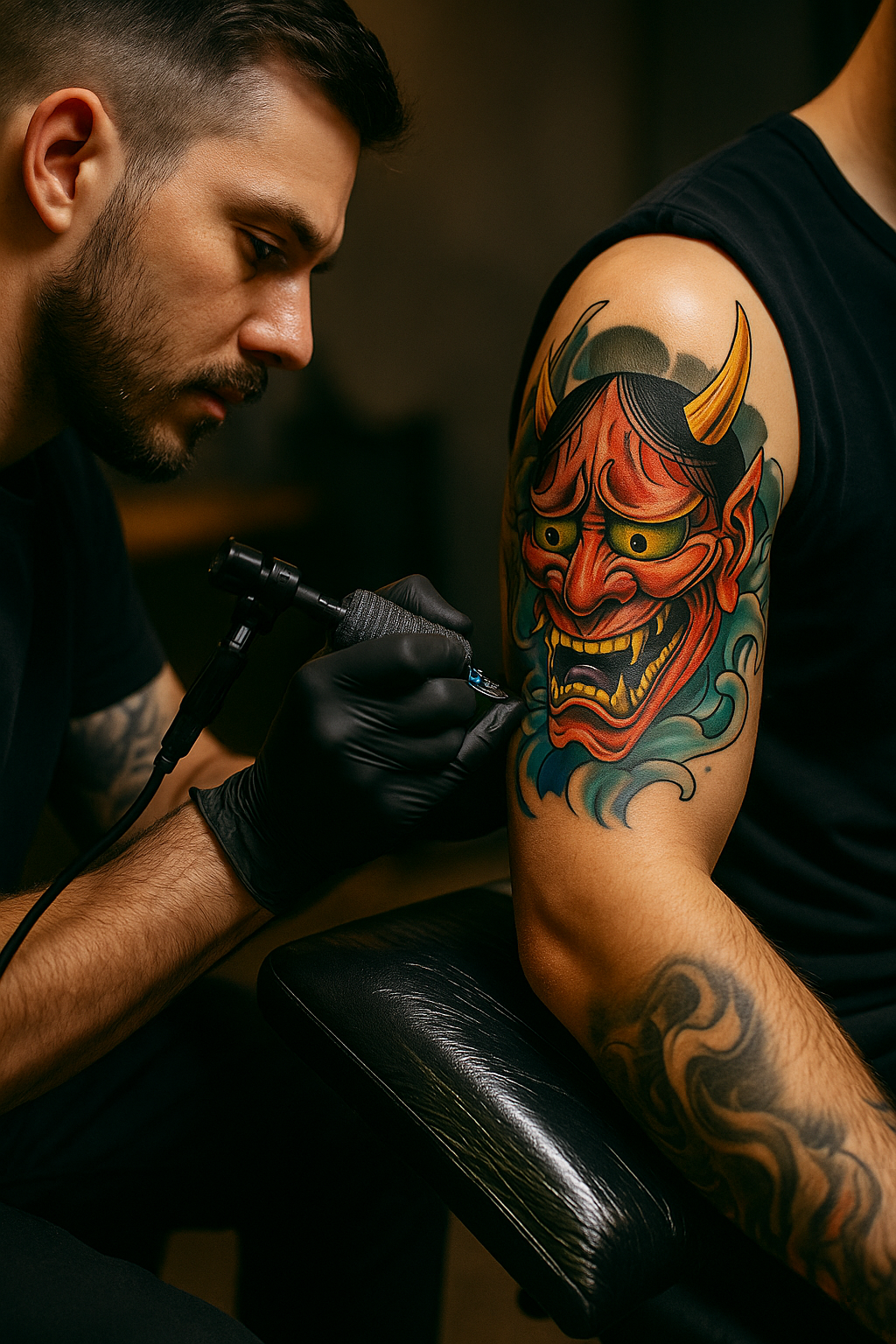
Hannya became an important visual motif beyond the Noh stage, especially in Japanese-inspired tattoo art. A tattoo can preserve elements of the traditional theatrical meaning—jealousy, rage, emotional suffering, obsession, and transformation—but modern wearers and artists often add personal interpretations that do not belong to the historical Noh role.
Traditional Meaning vs. Modern Tattoo Interpretation
In Noh, Hannya is fundamentally a female demonic role shaped by obsessive emotion and suffering. In tattoo culture, the image may additionally represent surviving emotional pain, transformation after hardship, recognition of destructive jealousy, resilience, or confronting the darker side of one’s own emotions.
Some people also choose Hannya as a personal symbol of protection or as an image meant to confront evil with a fearsome face. That can be a valid modern or individual interpretation, but it should not be described as the universal original meaning of the Noh mask.
Color and Surrounding Motifs
Modern tattoo meaning depends heavily on composition. Red, blue, black, gold, or other colors may be chosen for aesthetic or personal reasons, while surrounding elements such as snakes, flowers, flames, waves, or other Japanese-inspired motifs can change the visual narrative. There is no single traditional dictionary that assigns one fixed meaning to every Hannya tattoo color and motif combination.
For that reason, the most accurate interpretation of a tattoo considers both the historical Hannya symbolism and the intention of the artist or wearer.
The Hannya Mask in Modern Culture
The Hannya mask has moved far beyond the Noh stage and now appears in tattooing, illustration, fashion, sculpture, film, games, and other forms of popular visual culture. Its immediate visual impact—horns, metallic eyes, fangs, and a face caught between anger and suffering—makes it easy to recognize even when it is removed from its original theatrical setting.
Modern adaptations may emphasize horror, feminine rage, beauty, rebellion, strength, or supernatural power, but these interpretations are not always equivalent to the traditional Noh role. The mask’s enduring appeal comes from its emotional complexity: even as a global visual icon, Hannya remains more nuanced than a generic demon face or a fixed tattoo symbol. Understanding its theatrical meaning makes it easier to distinguish historical symbolism from later artistic reinterpretation.
Japanese Mask Meanings: History, Symbolism, and Traditional Types
Traditional Indian Masks: Meanings, Rituals & Traditions
The History and Symbolism of Masks in Ancient Greek Theatre
Death Masks: History, Purpose, and Famous Examples
Kitsune Mask Meaning, History, and Symbolism in Japan
Scold’s Bridle: History, Use & How the Punishment Worked
Explore More Mask Stories 👇